Accelerate your Embedded Development

Save Time, Reduce Risk,
Improve Quality

Develop with Confidence

Deliver on Time

Better Embedded Software Starts Here,
with the right Tools, Expert Guidance and trusted Support

Percepio logo
Razorcat Development logo

Click Logo for News

Explore the Embedded Development Lifecycle

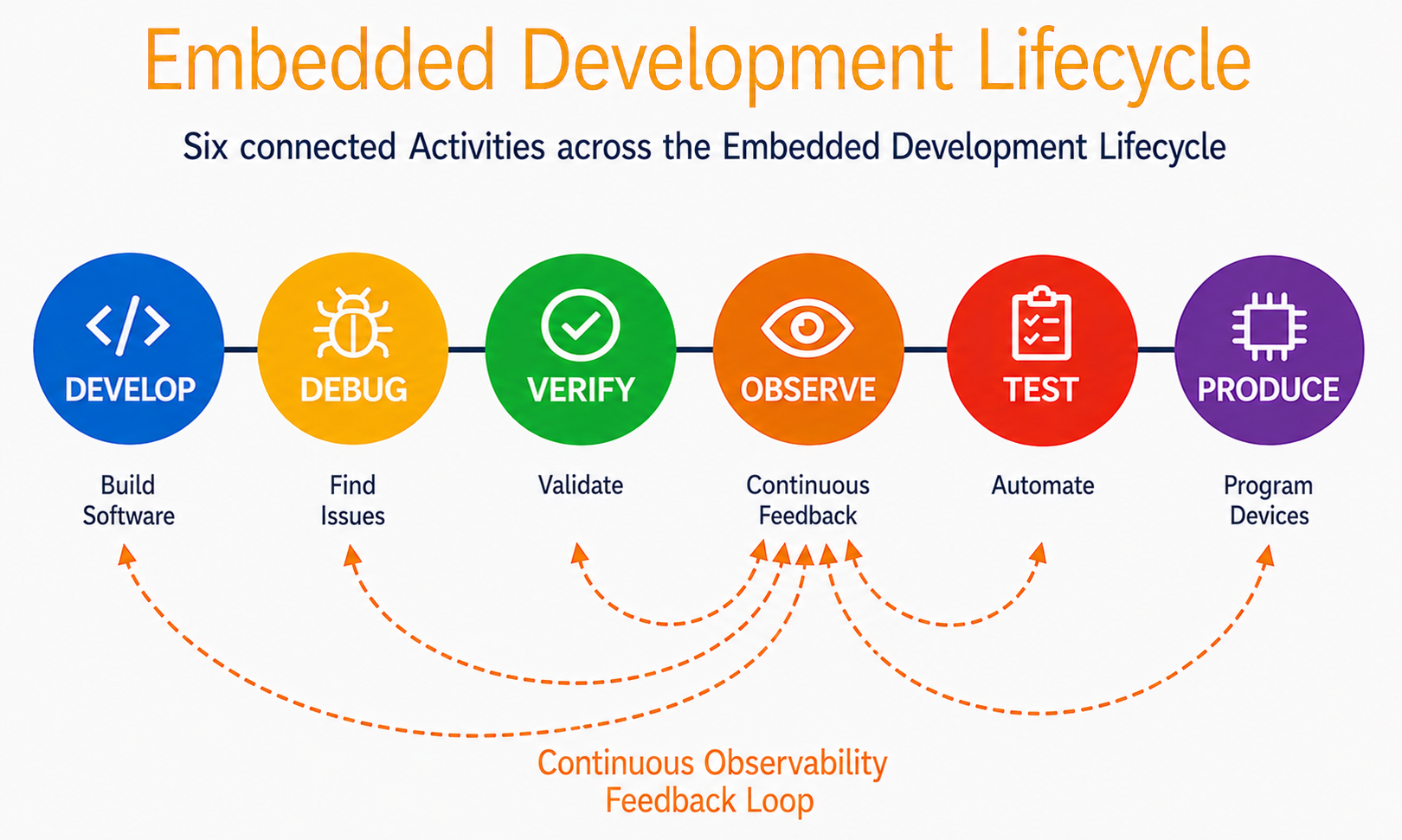
Embedded Development is not a Sequence of isolated Phases.

Development, debugging, verification, observability, testing and production are interconnected activities that continuously influence each other throughout a project.

Continuous Observability extends across this lifecycle, providing runtime insight and feeding information from integration, testing and operation back into development.

Develop
Build your Embedded Application with the Right Tools

Every embedded project needs a solid foundation. Professional development environments, compilers, RTOS and proven middleware help developers create reliable applications while reducing integration effort and development time.

➡️ RTOS, Embedded Studio, Embedded Middleware
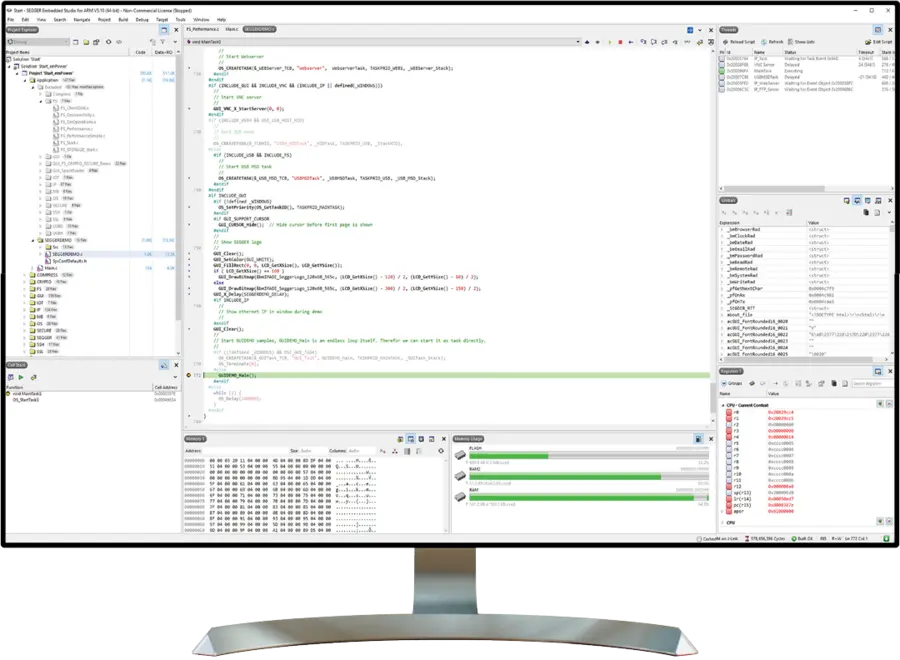
Embedded software development with SEGGER Embedded Studio and Embedded Middleware

Debug
Find & Understand Problems in your Embedded Application

Reliable debug and trace tools provide direct access to the target system and help developers investigate software behavior, identify defects and understand difficult runtime problems during development and integration.

➡️ J-Trace Probes, J-Link Debug Probes
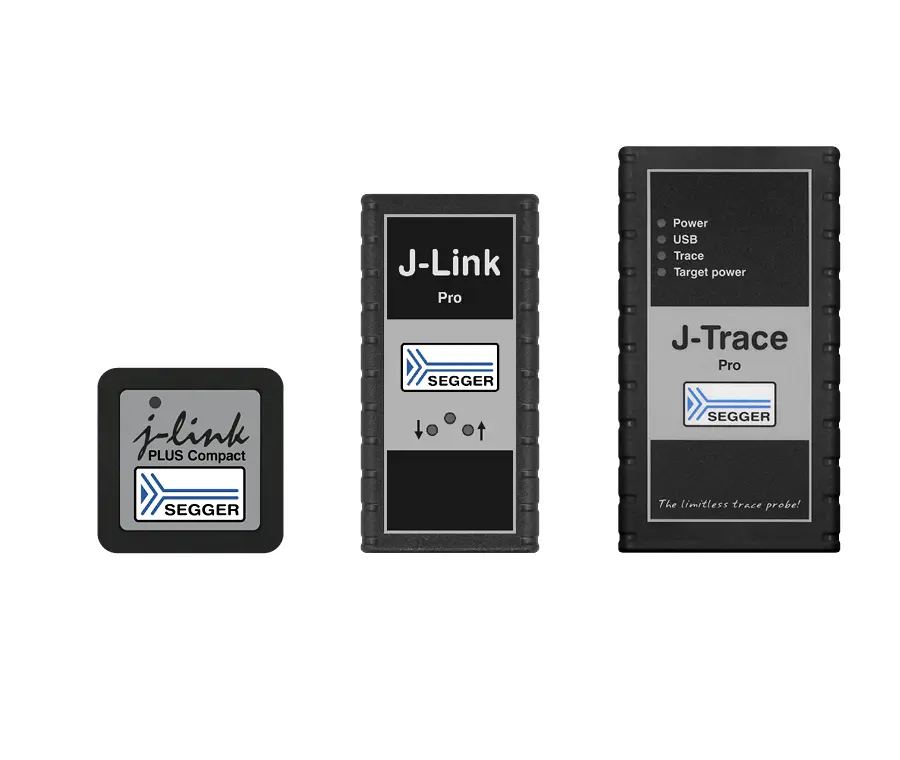
Embedded software debugging and trace with SEGGER J-Link, J-Trace and Ozone

Verify
Understand Runtime Behavior

Runtime analysis helps developers verify how embedded software actually behaves on the target. SystemView provides detailed insight into task execution, interrupts and system events, supporting performance analysis and design validation during development.

➡️ System Analysis, Design Validation
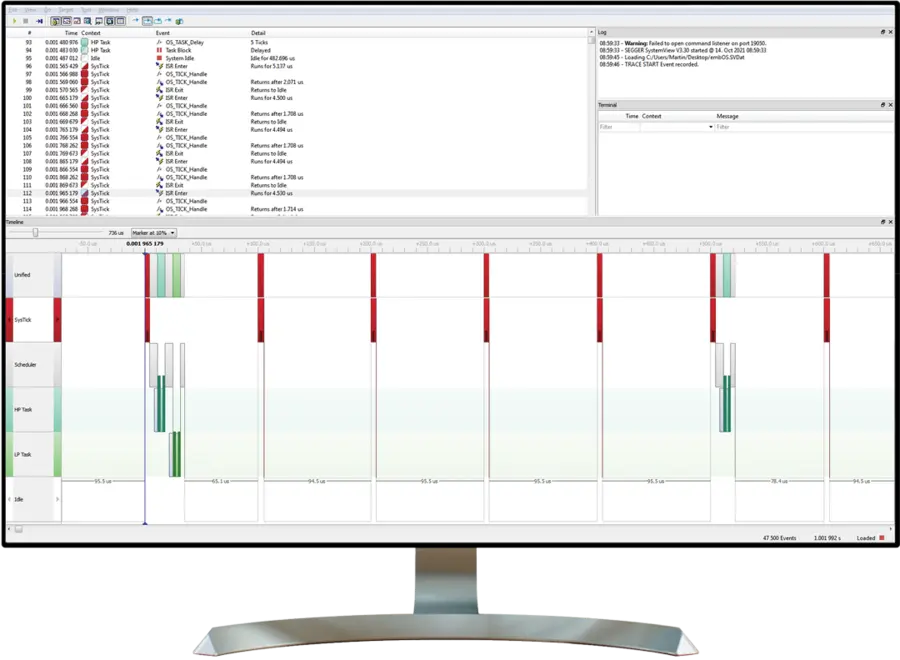
Runtime verification and system analysis with SEGGER SystemView

Observe
Gain Continuous Insight into your System

Continuous Observability extends runtime insight across integration, testing and operation. Tracealyzer, Detect and DevAlert help developers understand system behavior, recognize and capture problems, and feed diagnostic information from running systems back into development.

➡️ Continuous Observability, Tracealyzer
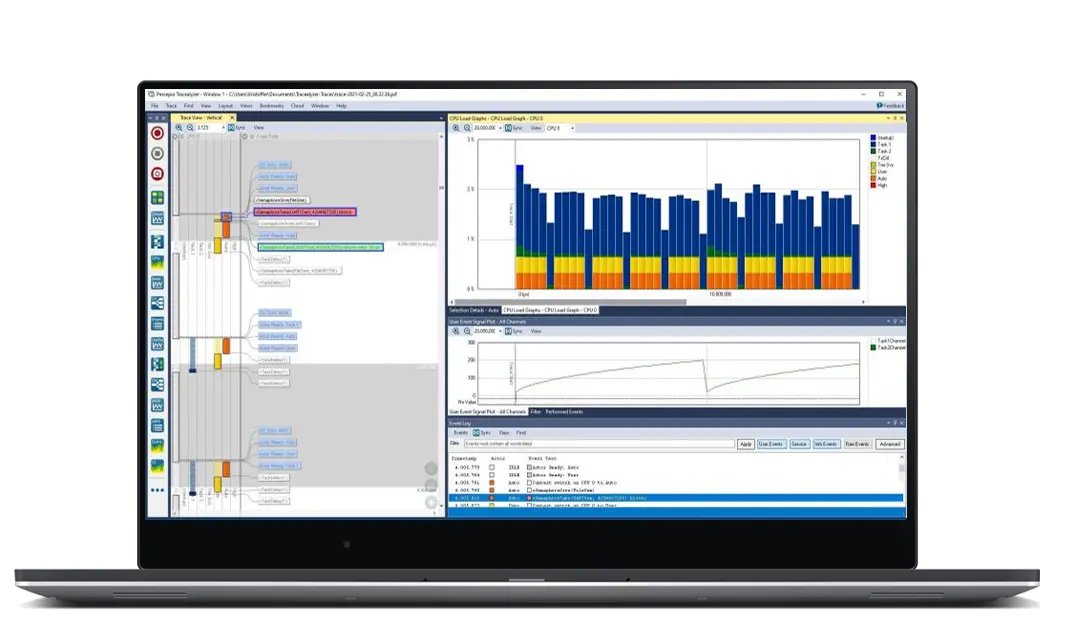
Continuous Observability for embedded software with Percepio Tracealyzer

Test
Validate your Software against Real-World Requirements

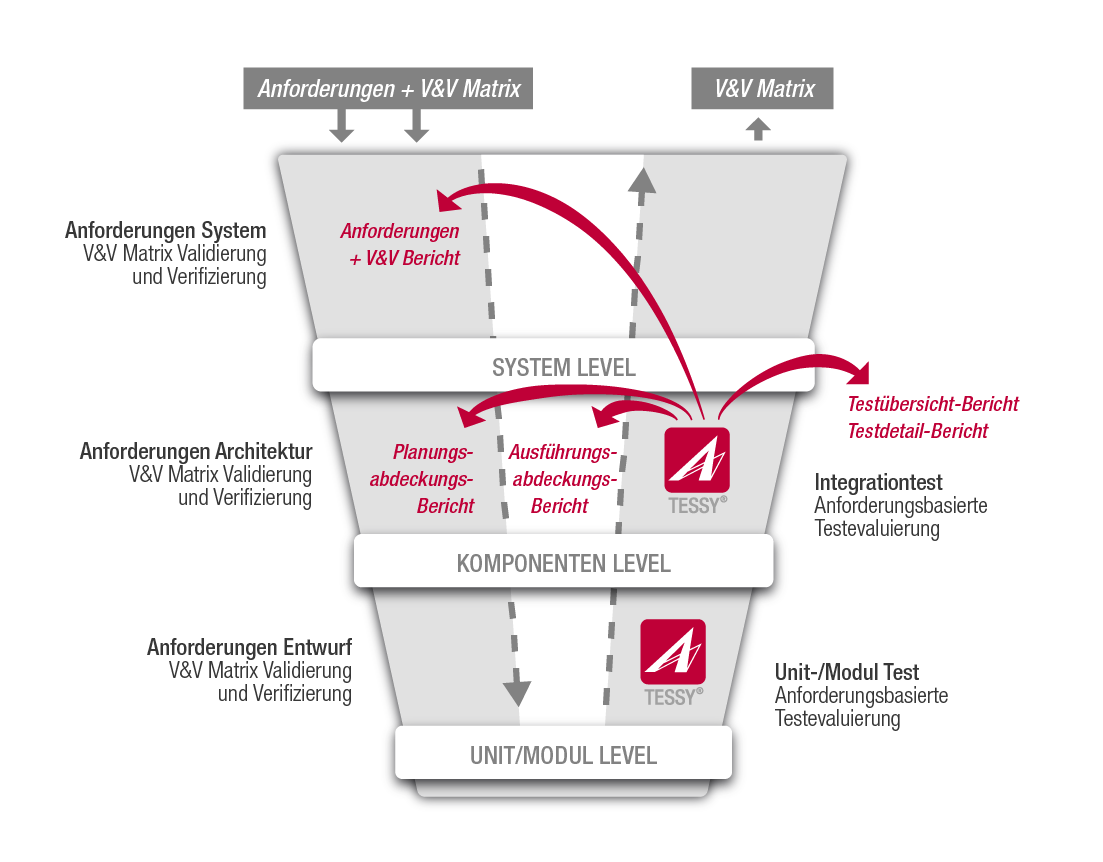
Automated software testing helps verify embedded applications against requirements and prevents regressions as development progresses. TESSY supports unit and integration testing, requirements traceability and code coverage for embedded C/C++ software.

➡️ Automated testing of embedded software with TESSY

Embedded software unit and integration testing with Razorcat TESSY

Produce
Make your Product ready for your Customer

Once embedded software is approved for production, reliable programming processes bring it onto the final hardware. Professional production programmers enable fast, reproducible and traceable device programming — from prototypes and small series to mass production.

➡️ Flasher Single-unit and Gang Programming
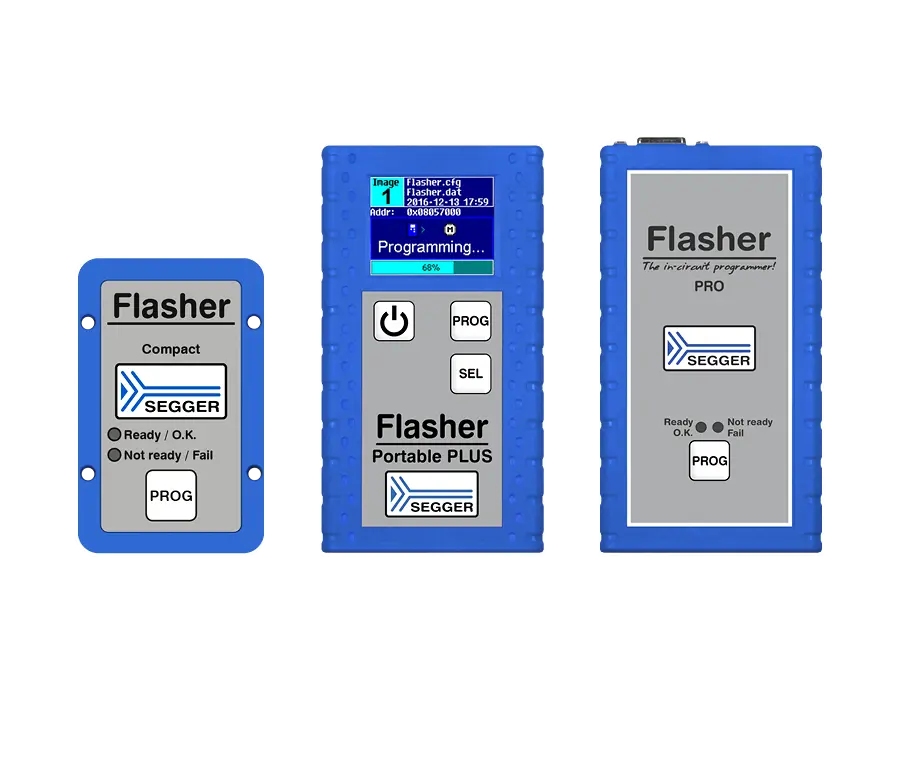
Production programming for embedded devices with SEGGER Flasher

Get Expert Help
Choose the right Tools with Expert Guidance

Solve complex engineering challenges with our expert team. Delivered on time, on budget, every project. Receive dedicated personal technical support throughout your entire engagement for complete peace of mind.

➡️ Get personal assistance by an embedded expert

“Do today already, what others think tomorrow only, steady is only the change.”

— Heraclitus, Greek Philosopher (535 to 475 B.C.)

Companies relying on our Solutions & Services

© 2026 Carnica Technology. All Rights Reserved. Contact Us · Legal & Privacy

Top Speed for SEGGER Flasher

Flashers achieve top speed for programming Infineon AURIX TC4x

SEGGER Flasher in-system programmers now support Infineon AURIX TC4x microcontrollers with high-speed
flash programming. Programming speeds are very close to the theoretical limit specified by Infineon.

View More

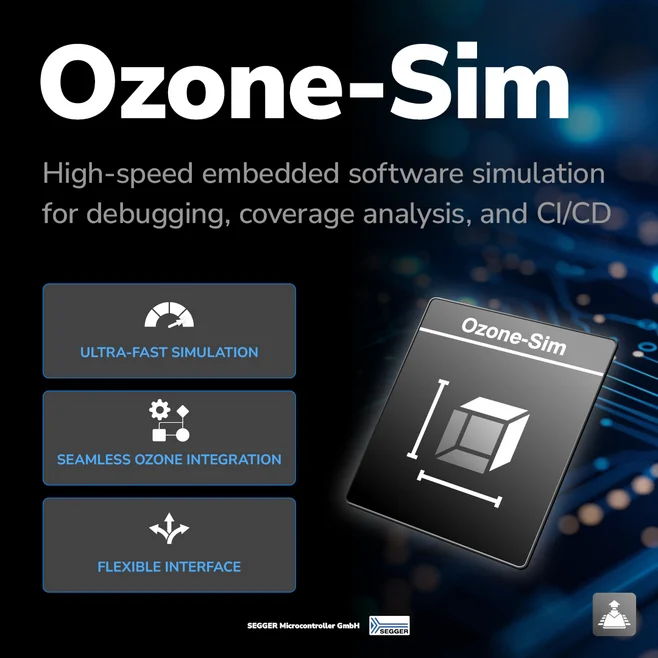
SEGGER Ozone-Sim

Ozone-Sim for high-speed embedded software simulation

With Ozone-Sim, SEGGER introduces a high-performance instruction set simulator designed to accelerate
embedded software development, debugging, testing, and analysis.

View More

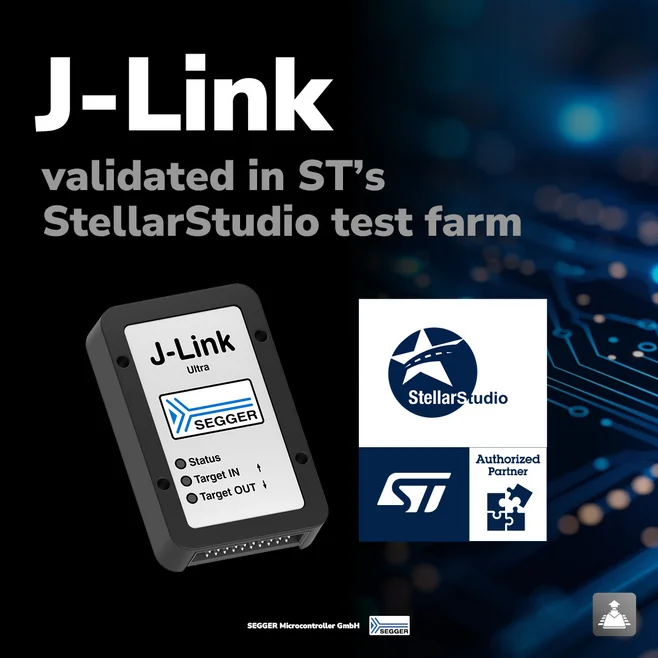
SEGGER J-Link ULTRA

SEGGER redesigns J-Link Ultra with compact housing and USB-C

SEGGER announces a redesigned J-Link Ultra debug probe featuring a compact housing with USB Type-C connectivity and integrated mounting holes.

View More

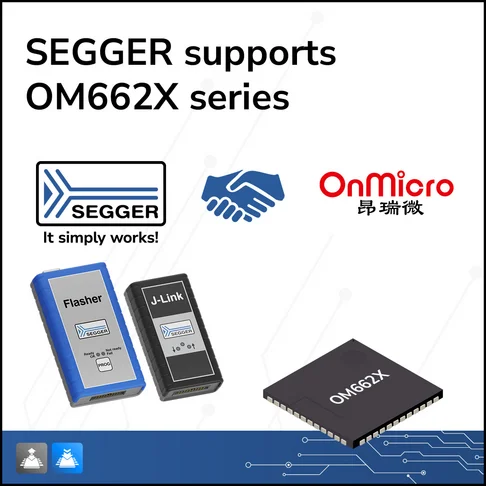
Support for OnMicro OM662X

Support for OnMicro OM662X series to SEGGER J-Link and Flasher

SEGGER announces official support for the OM662X series from OnMicro by its industry-leading J-Link debug
probes and Flasher in-system programmers.

View More

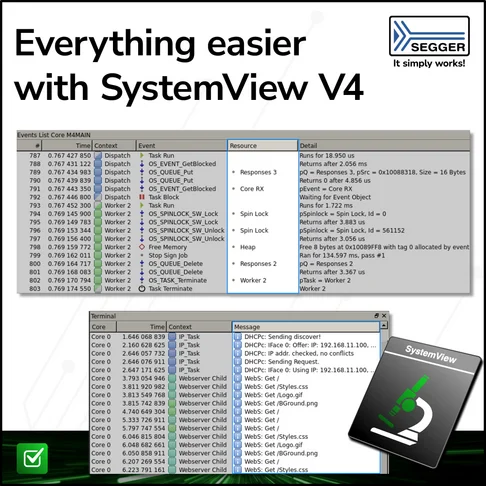
SEGGER SystemView V4

System analysis made easier with SystemView V4

The new version of System View introduces support for adding the firmware ELF file directly to a project. This provides SystemView with crucial information without requiring any modification of the target source code, simplifying both recording and analysis of system behavior.

View More

SEGGER emApps: Best of Show

emApps receives Best in Show Award at embedded world 2026

SEGGER's emApps concept for bringing app-based functionality to embedded systems received the Best in
Show Award from Embedded Computing Design in the Dev Tools, Software & OS category at embedded world
2026. The award recoanizes innovative products and technologies presented at the show that significantly
impact the embedded-svstems industry.

View More

Software-defined Medical Devices

Continuous Operational Assurance:
the missing discipline for software-defined medical devices

Software-defined medical devices are transforming healthcare and they also challenge many of the assumptions behind traditional device development.

If software can evolve after deployment through over-the-air updates, Al models, and increasingly connected ecosystems, is one-time verification still enough? Or do we need a new way of thinking about assurance throughout a device's operational life?

View More

HOT Update: TRACEALYZER v4.12

Tracealyzer 4.12 is now available for download. Here's what's new.

— Simplified Linux installation — 4.12 adds DEB and RPM packages and an apt repository, making installation significantly easier for Linux-based development environments.

— Zephyr SMP support — Tracealyzer now supports multicore Zephyr systems using symmetric multiprocessing, giving you full trace visibility across all cores.

— Object Utilization view — visualise utilisation levels for kernel objects such as message queues over time, making it easier to spot capacity limits, bottlenecks, or unexpected resource usage at runtime.
— Minor fixes and improvements — the release also includes general bug fixes and product refinements.
Customers with an active maintenance subscription can download Tracealyzer 4.12 now.

View More

Percepio Continuous Observability

Building Reliable Embedded Systems with Continuous Observability

Observability in software systems refers to the ability to measure a system's internal states by examining its outputs, such as logs, system traces and memory dumps. Traditionally, observability has been reactive, with developers using debugging tools only when problems are detected.

View More

Video Tutorials: Detect, DevAlert

New series of video tutorials Tracealyzer, Detect and DevAlert

Check out the new series of tutorial videos made by PERCEPIO. Learn about Detect, DevAlert 2.0, runtime insights: Azure RTOS, verify task timing and scheduling, tracing Zephyr RTOS, user events in Tracealyzer, efficient firmware development and a Tracealyzer Demo.

View More

White Papers

Continuous Observability in Embedded Systems, Fast Debugging and more

Get the latest White Papers from PERCEPIO: Continuous Observability in Embedded Systems, Improving the Reliability of the Internet of Things, Stop Guessing: See Inside RTOS Firmware with Visual Tracing and other hot topics.

View More

Percepio CEO Johan Kraft

... interviewed by Jacob Beningo: Watch the video.

Embedded World 2018 - Interview with Johan Kraft CEO of Percepio

NEW: TESSY 6.0

TESSY recognized as both innovative and feature-oriented product

Razorcat has introduced several powerful new features designed to enhance the workflow. You can find a detailed overview on the dedicated page: „NEW: TESSY 6.0".

View More

NEW: Razorcat TESSY 5.1

Test without changing source code with fault injection in new TESSY 5.1

TESSY 5.1: With "Code Access" and "Hyper Coverage" in TESSY v5.1, embedded software testers can easily aggregate coverage across different tests, test levels and test tools - and automatically find hidden or untested code throughout the source code including all variants.

View More

TESSY Certified Unit Testing Tool

TESSY qualified for IEC 61508 and ISO 26262 standards

TESSY is a powerful and certified Unit and Integration Testing Tool for embedded C/C ++ supporting a wide range of microcontrollers, IDE/compilers and target platforms. TESSY is qualified for safety-related software development according to IEC 61508 and ISO 26262.

View More

TESSY: Professional Test Management

TESSY automates the entire unit test cycle including regression tests

TESSY automates the entire unit test cycle including regression testing for embedded software in C/C++ on different target systems. TESSY is qualified for safety-criticial software development according to IEC 61508 and ISO 26262 standards.

View More

RAZORCAT CTE: Class Tree Editior

Easily create systematic test cases in graphical notation

CTE Classification Tree Editior provides a systematic and easy understandable way to create test cases in a graphical notation. It is used to transform a (functional) specification into a set of error sensitive and low redundant test case specifications.

View More

CCDL: Check Case Def. Language

Use CTE to transform functional specification into a set of test cases

RAZORCAT Classification Tree Editiopr (CTE) provides a systematic and easy understandable way to create test cases in a graphical notation. It is used to transform a (functional) specification into a set of error sensitive and low redundant test case specifications.

View More